
Market news and analysis
The key developments across Bulgaria's renewable energy and electricity market — projects, investment, regulation, grid, technology and prices.

Maritsa East puts solar and BESS into its 2027–2031 transition plan
Bulgaria's new state holding links solar, storage, mine-land rehabilitation and grid infrastructure, although project capacities, budgets and schedules remain open.
More articles

EU approves Germany's capacity mechanism worth up to €35.2bn
Germany's capacity market will open in 2031 to generation, storage, demand response and qualifying cross-border resources, creating a new BESS revenue route.

Return reaches financial close on 200 MW / 800 MWh Sirius BESS under Vattenfall tolling agreement
The Dutch project combines an investment of approximately €180 million, a long-term fixed-fee tolling agreement and flexible transmission rights. Its structure offers a practical example of how revenue certainty and grid access can make large-scale battery storage financeable.

Spain proposes 80% hourly renewable power matching for data centres
Spain's draft data-centre rules link demand to new renewables and 80% hourly matching, raising questions for PPAs, solar projects and battery storage.
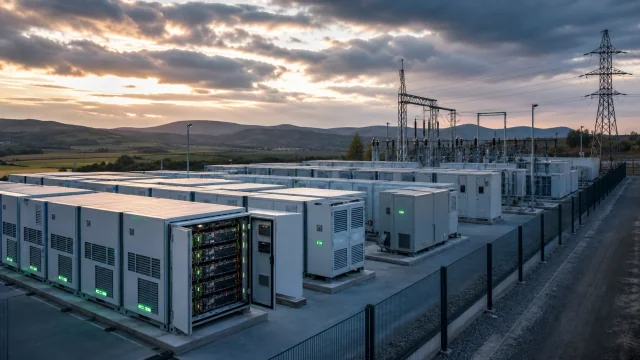
Bulgaria's battery product fee comes under scrutiny as the BESS market expands
Bulgaria's product fee for industrial lithium-ion batteries is equivalent to about EUR 2.81/kg. Industry group BASEL wants a separate rate for stationary storage, arguing that the current framework does not reflect how utility-scale BESS is built or recycled.
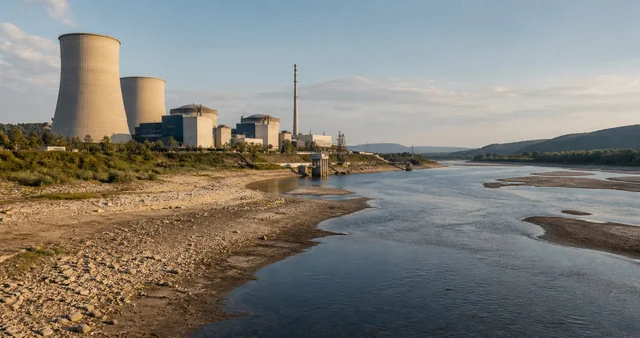
Kozloduy Unit 5 to cut output by 120 MW as Danube levels fall
Kozloduy NPP will reduce Unit 5 output by about 120 MW on 21 August as critically low Danube levels create an unprecedented operating constraint for the Bulgarian nuclear plant.
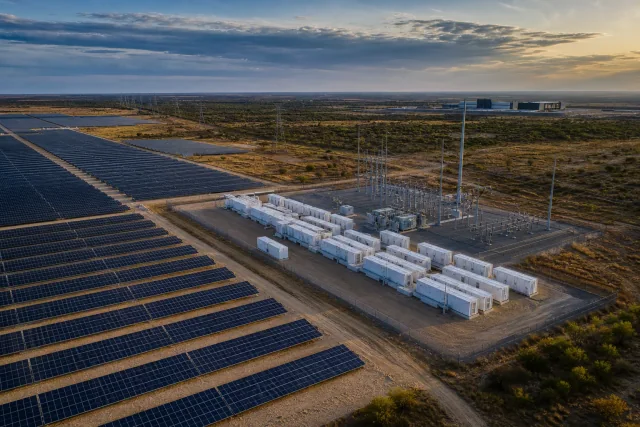
US plans record 86 GW of new power capacity in 2026 as solar and batteries lead
The EIA reports 86 GW of planned new US utility-scale capacity in 2026. Solar accounts for 43.4 GW and battery storage for 24 GW as load growth and AI infrastructure reshape the market's investment logic.
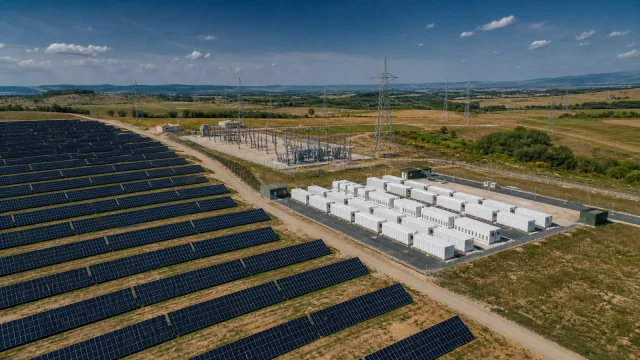
Renewable curtailment is rising globally — and Bulgaria is emerging as a battery storage case study
Renewable deployment is accelerating faster than power grids can adapt. Rising curtailment across China, Australia, Japan and India is exposing the next major constraint of the energy transition, while Bulgaria is increasingly being highlighted as an example of how rapid battery deployment can help absorb excess renewable generation.
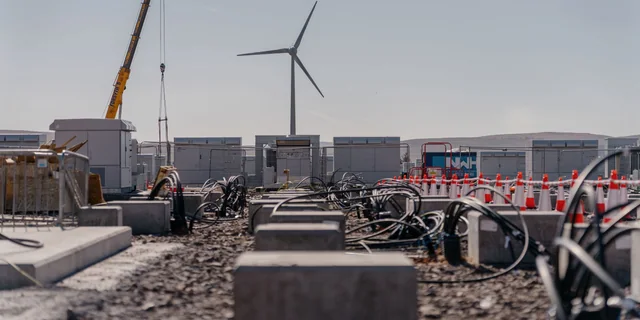
Coalburn 1 goes live: 500 MW / 1 GWh and a new scale for European batteries
One of Europe’s largest operating batteries is now live in Scotland. Beyond the headline 500 MW / 1 GWh rating, Coalburn 1 offers a more useful lesson: how long-term contracts and institutional capital are reshaping the business model for utility-scale storage.
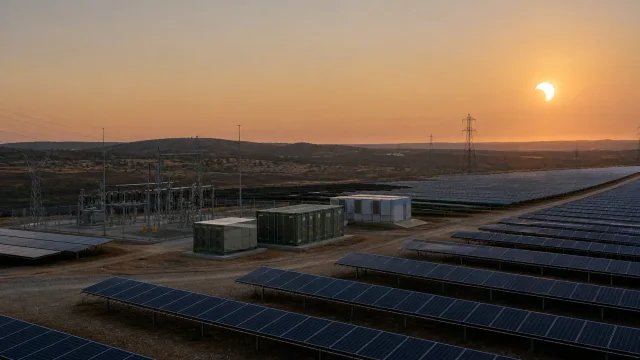
Up to 9.7 GW of solar generation could disappear within hours: how the eclipse will test Europe’s grids
The total solar eclipse on 12 August will trigger a sharp but predictable change in photovoltaic output across parts of Europe. The event will not test whether Europe has enough energy, but how quickly grids, batteries and system operators can respond.
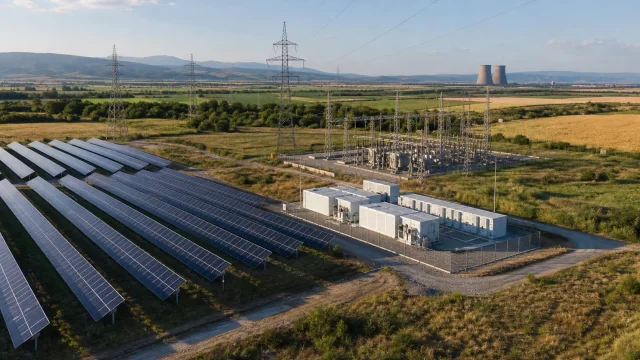
Bulgaria is a net exporter again: how solar, batteries and Kozloduy support the region
Strong electricity demand from Romania and Hungary has put Bulgaria at the centre of the regional market. The important development is not a sensational export figure, but the system’s growing ability to combine baseload generation, solar, batteries and interconnectors.
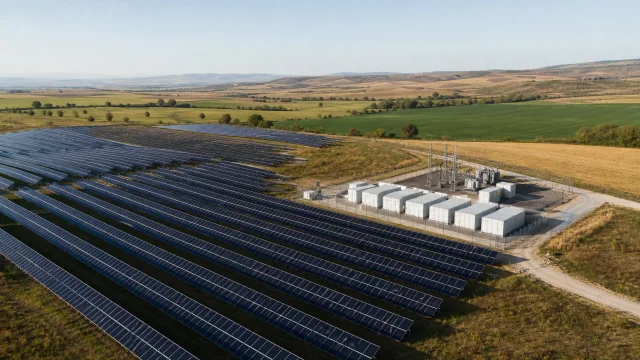
Deadline 1 September: €54.9 million for solar-plus-storage projects in three Bulgarian regions
The EU RENEWFM call supports ground-mounted solar plants with integrated battery storage in Stara Zagora, Pernik and Kyustendil. Projects will compete not only on readiness, but also on the amount of support requested per megawatt.
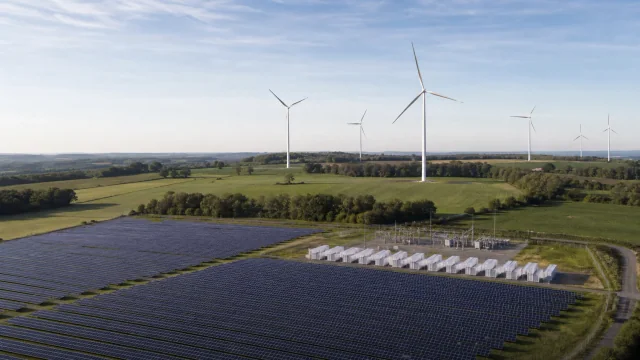
TotalEnergies buys Shell’s European renewables business and brings KKR into a 1.2 GW portfolio
The two parallel transactions illustrate the evolving model of large renewable investors: acquiring development pipelines, retaining operational control and recycling capital through minority sales in advanced assets.
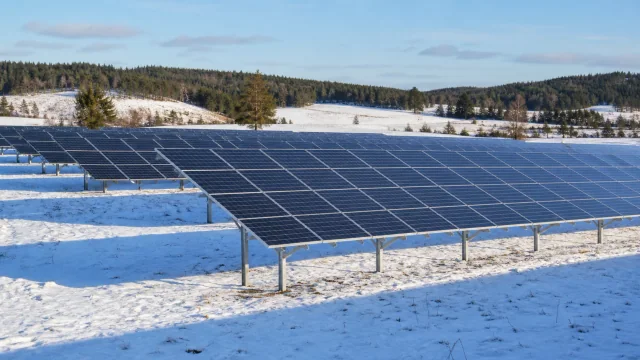
Europe’s solar map is expanding north
Solar power is no longer confined to Europe’s sunniest southern markets. Data from Finland, Sweden, Norway and Scotland show that PV can create value at higher latitudes — but project success increasingly depends on the business model, self-consumption, grid access and climate-adapted engineering.
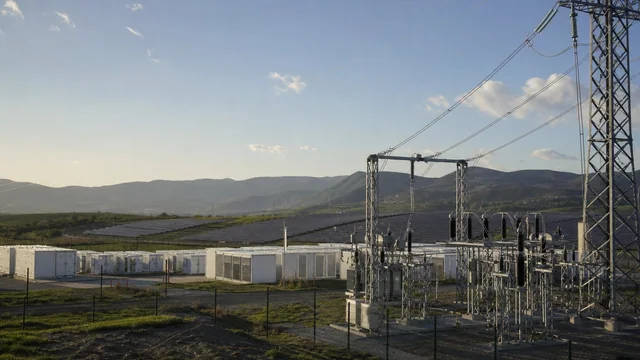
Europe’s next energy-transition asset: grids and batteries
Europe already has a large portfolio of solar and wind capacity, but the energy transition is entering a more difficult stage. The central question is now whether power systems can connect, manage and use new capacity efficiently.
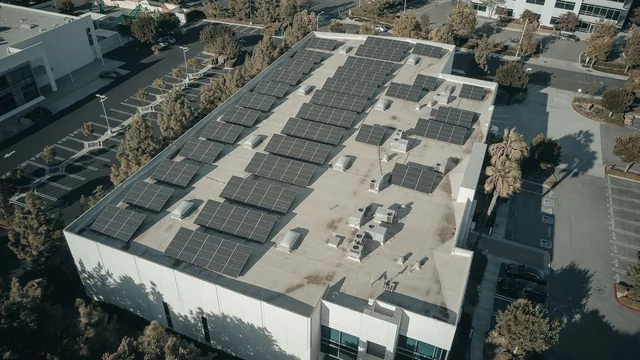
Bulgaria proposes solar-ready building rules as efficiency obligations tighten
Draft legislation would introduce stronger energy-saving requirements for public authorities and large companies while bringing solar-generation potential into the building design process. The changes could create a more predictable market for rooftop PV, energy services and building technologies.