
Europe’s next energy-transition asset: grids and batteries
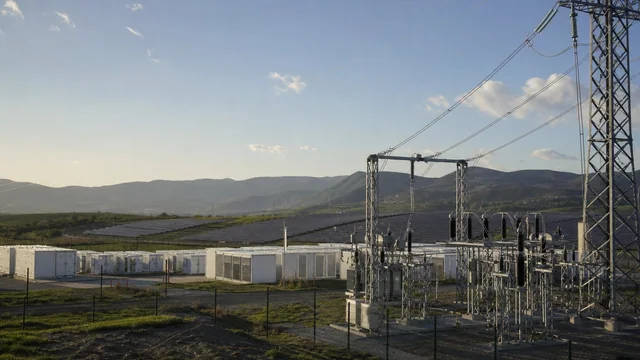
Europe already has a large portfolio of solar and wind capacity, but the energy transition is entering a more difficult stage. The central question is now whether power systems can connect, manage and use new capacity efficiently.
At a glance
For more than a decade, Europe’s energy transition was measured mainly through newly installed renewable capacity. Solar and wind became a leading part of the power mix, and renewables supplied 47.3% of electricity generated in the European Union in 2025.
That progress has brought the next major constraint to the foreground: electricity grids and the shortage of flexibility.
More projects are reaching a point where generation is technically possible but there is not enough capacity to connect them or carry their output safely. At the same time, periods of high photovoltaic generation increasingly coincide, adding pressure on prices and increasing the need for storage, demand management and better coordination between generation and the grid.
Europe will need grid investment on an unprecedented scale
According to the European Commission, around €584 billion of investment in electricity infrastructure will be needed by the end of this decade to meet REPowerEU objectives. A significant share must go to distribution networks, where most decentralised generators, storage systems, charging points and newly electrified consumers are connected.
The outlook beyond 2030 is larger still. Commission estimates indicate a need for approximately €730 billion for distribution grids and a further €477 billion for transmission infrastructure by 2040.
These figures show that the grid can no longer be treated as passive infrastructure that simply follows the construction of power plants. It must be developed in advance, based on expected growth in generation and demand.
This is the purpose of anticipatory investment. Instead of building only after a specific request appears, network planning must account for future industrial zones, renewable generation, batteries, electric vehicles, heat pumps and data centres. Some assets may initially be underused, but the alternative can be even more expensive: years of delay in connecting new generation and demand.
Batteries are becoming part of the system, not an addition to a solar park
Alongside network investment, Europe will need to expand electricity storage substantially. European Commission data from 2026 put installed EU storage capacity at about 55 GW, while system needs could reach around 200 GW by 2030.
This is not a binding quota allocated among member states. It is an indicative estimate of the scale required to absorb a larger share of variable generation and maintain balance in the power system.
By April 2026, more than 30 GW of additional storage capacity in the EU had already been permitted or was under construction, with battery systems accounting for most of it.
The shift is also changing the BESS investment model. Early market revenues were often associated mainly with price arbitrage: charging during low or negative prices and selling when demand was higher. As battery capacity expands rapidly, that strategy is unlikely to remain sufficient on its own.
Resilient projects will need to combine balancing and ancillary services, day-ahead and intraday arbitrage, local network constraint management, peak shaving, optimisation of on-site generation and consumption, and flexibility services for network operators or large industrial customers.
A battery’s value is therefore no longer determined only by its power and usable energy capacity. The energy-management system, multi-market strategy, grid-connection terms, performance guarantees and cell-degradation management are becoming increasingly important.
Bulgaria is among the most active battery-storage markets
The change is particularly relevant for Bulgaria. The country has recorded rapid growth in photovoltaic capacity while facing limited short-term flexibility, congestion in parts of the grid and widening differences between periods of strong solar output and evening demand.
The largest public response is the RESTORE investment under Bulgaria’s Recovery and Resilience Plan. Official Ministry of Energy data show that 82 projects were selected for funding worth BGN 1.149 billion. Their combined declared usable energy capacity is 9,712.89 MWh, compared with a minimum national-investment target of 3,000 MWh.
This places Bulgaria among Southeast Europe’s most dynamic markets for large battery systems. Rapid deployment also raises new questions: whether every system will have a durable revenue model, how competition in balancing markets will change, and whether the grid can manage the simultaneous charging and discharging of many batteries.
The projects are being delivered within a very short Recovery Plan horizon. In 2026, the Ministry of Energy identified August of that year as the deadline for completing the Plan’s energy-investment activities, creating significant pressure on procurement, construction, testing and connection procedures.
The programme’s success will therefore not be measured only in installed megawatt-hours. The more important test is whether the new systems genuinely improve the flexibility of Bulgaria’s power system and enable the integration of more renewable energy.
Grid connection is becoming part of a project’s value
Until a few years ago, renewable investors focused primarily on resource quality, land ownership, permitting and equipment prices. Today, connection terms can carry equal or even greater weight.
A project with good land and competitive technology can remain economically unusable without a realistic connection timetable or when the required network investment is too expensive. Conversely, a secured connection point, a clear schedule and the ability to add storage can significantly increase investment value.
This also changes transaction due diligence. A grid opinion or preliminary agreement is no longer sufficient on its own. Investors must examine technical conditions, import and export restrictions, required facilities, schedules, bank guarantees and exposure to future changes in network configuration.
The next winner will not simply produce the cheapest electricity
Solar and wind will remain key drivers of European electrification, but new capacity will increasingly depend on the infrastructure around it.
In the next phase, competitive advantage will belong to projects that can not only generate low-cost electricity but deliver it when and where the system needs it.
That requires a better combination of renewables, storage, demand management, forecasting, automation and network infrastructure.
Europe’s energy transition is not slowing down. It is entering a more complex phase in which value will be created not only by new megawatts but by the ability to integrate and manage them efficiently.