
Renewable curtailment is rising globally — and Bulgaria is emerging as a battery storage case study
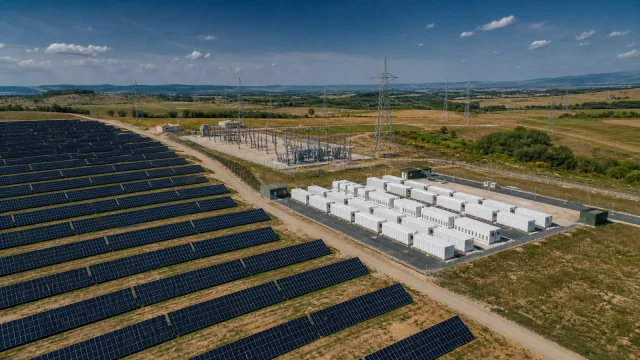
Renewable deployment is accelerating faster than power grids can adapt. Rising curtailment across China, Australia, Japan and India is exposing the next major constraint of the energy transition, while Bulgaria is increasingly being highlighted as an example of how rapid battery deployment can help absorb excess renewable generation.
At a glance
The global renewable energy market is moving into a different phase. For much of the past decade, the industry's main challenge was adding enough low-cost wind and solar capacity. In a growing number of markets, that is no longer the binding constraint.
The problem is increasingly what happens after the capacity is built. Transmission congestion, limited system flexibility and concentrated renewable output are forcing grid operators to curtail growing volumes of otherwise available clean electricity.
A Reuters analysis published on 17 August highlights how quickly the issue is developing across several major renewable markets.
China exposes the scale of the challenge
China provides the most dramatic example. Estimates from Global Energy Monitor and the Centre for Research on Energy and Clean Air suggest that roughly 360 TWh of potential wind and solar generation was curtailed during the first half of 2026, up 49% year on year.
That figure should not be confused with China's official curtailment statistics. The National Energy Administration reports significantly lower implied curtailment levels, with utilisation rates of 91.4% for solar and 90.9% for wind over the same period. The difference reflects contrasting methodologies and underlines how difficult it remains to quantify the full scale of constrained renewable production.
What matters for investors, however, is the direction of travel. China has built renewable generation at extraordinary speed, particularly in its northern and north-western regions. Grid reinforcement and long-distance transmission have not always kept pace. The result is becoming visible in project economics: more generation is available at times and locations where the system cannot fully accommodate it.
Curtailment is becoming a global investment issue
The same pattern is emerging elsewhere. Curtailment in Australia's National Electricity Market reached approximately 2.93 TWh in the first half of 2026, up 37% from the previous year. Japan recorded around 2.35 TWh, representing a 34% year-on-year increase.
India is also beginning to experience more material levels of constrained solar output, with around 8.13 TWh of solar generation curtailed during the quarter to June, according to the data cited by Reuters.
These are very different electricity systems, but the underlying issue is similar. Renewable generation can often be developed faster than transmission networks, interconnection capacity and flexible demand. That creates a new category of investment risk.
Grid access is no longer enough
For renewable developers, securing a grid connection has traditionally been treated as one of the biggest milestones in project development. Increasingly, however, the quality of that connection matters just as much as having one.
A project can be technically connected and still face material curtailment exposure if the surrounding network is congested or if too much generation with the same production profile enters the market.
Future project valuations will therefore have to look more closely at expected local curtailment, congestion patterns, hourly price formation, available network headroom, opportunities for co-located storage and the ability to shift output into higher-value periods.
For many developers, curtailment risk is moving from a technical assumption buried inside an energy-yield model to a core commercial variable.
Why batteries are becoming more valuable
Battery storage cannot create additional renewable generation. What it can do is change when that generation enters the market.
Where solar output is being constrained around midday, a battery can absorb part of the excess and discharge it later, when both grid capacity and market prices may be more favourable. For co-located projects, this can improve utilisation of an existing grid connection and reduce exposure to periods of extreme oversupply.
That makes the commercial role of BESS increasingly broader than simple merchant arbitrage. Storage is becoming part of the infrastructure required to integrate large volumes of variable generation.
Bulgaria is entering the global storage conversation
One of the more notable points in the Reuters analysis is the reference to Bulgaria and Chile as examples of markets where rapid battery deployment can help reduce renewable curtailment, based on comments from Ember analyst Kostantsa Rangelova.
For Bulgaria, that is a meaningful external validation of how quickly its storage market has evolved. The country has added a substantial volume of utility-scale batteries in a relatively short period, alongside rapid growth in solar capacity.
Recent large projects include the 602 MWh battery system developed by Solarpro with CATL near Burgas and ContourGlobal's 202 MW / 500 MWh standalone BESS at the Maritsa East 3 site.
The significance is not simply the number of megawatts installed. Bulgaria is becoming an early European test case for what happens when rapid solar deployment is followed almost immediately by several gigawatts of storage. That interaction will increasingly shape wholesale prices, balancing markets and the economics of new renewable assets.
Storage is not a substitute for grid investment
There is an important limitation to the BESS story. Batteries can optimise the use of existing infrastructure, but they cannot solve a structurally undersized transmission system. Where congestion is persistent, new lines, substations and interconnectors remain essential.
The most resilient power systems will therefore require a combination of grid reinforcement, storage, demand-side flexibility and better coordination between generation and consumption. Even very large-scale battery deployment cannot replace the need for high-voltage transmission between renewable-rich regions and major demand centres.
The next renewable cycle will be about flexibility
Curtailment is becoming one of the clearest signals that the renewable investment cycle is changing. The industry has become extremely good at deploying wind and solar capacity. The harder task now is building an electricity system capable of using that output efficiently.
Generation capacity alone will no longer determine the attractiveness of a renewable project. Grid position, flexibility, storage access and the timing of output will increasingly influence returns.
For Bulgaria, being highlighted as an emerging storage case study is therefore more than a positive headline. It places the country inside a much broader global shift.
The next stage of the energy transition will not simply reward markets that build the most renewable capacity. It will reward those that can integrate it most effectively.