
Kozloduy Unit 5 to cut output by 120 MW as Danube levels fall
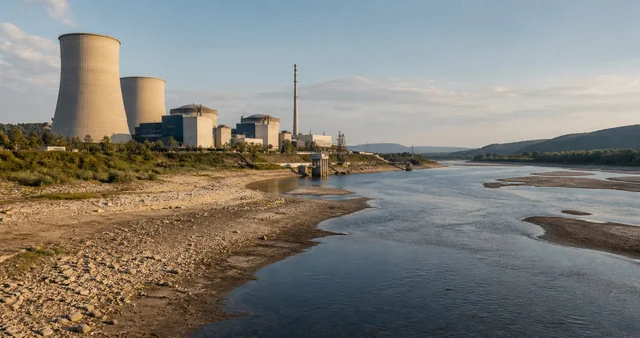
Kozloduy NPP will reduce Unit 5 output by about 120 MW on 21 August as critically low Danube levels create an unprecedented operating constraint for the Bulgarian nuclear plant.
At a glance
Bulgaria's Kozloduy nuclear power plant will lower the output of Unit 5 by approximately 120 MW on 21 August. The preventive measure follows a continued critical decline in the Danube and forecasts of further reductions in upstream water levels.
The plant describes the decision as a step to preserve safe and stable operation. It is a controlled derating rather than an emergency shutdown, and no problem has been reported in the reactor or its nuclear safety systems.
Kozloduy says this is the first time in its 52-year operating history that extreme weather and hydrological conditions have required a reduction in nuclear output.
Why a low Danube affects nuclear generation
Danube water does not cool the reactor directly. It is used in the plant's third circulation circuit to cool the turbine condensers on the conventional, non-nuclear side of the generating process.
After steam has passed through the turbine, it must be cooled and condensed back into water. Kozloduy supplies river water to the condensers through its own riverside pumping station and a system of channels. A prolonged fall in the river can make the reliable operation of that infrastructure more difficult.
The plant's three circulation circuits remain physically separated. River water does not come into contact with the primary circuit or nuclear fuel. The present constraint is therefore an issue of managing cooling conditions in the conventional part of the station, not a failure of nuclear cooling or containment.
Preparations began in July
A dedicated working group has been monitoring the Danube and the associated plant infrastructure since early July. Checks have covered the riverside pumping station, service-water systems, the hydrotechnical complex and other facilities whose operation depends on river conditions.
On 16 August, Bulgaria's Energy Ministry said both Kozloduy units were still operating to schedule and that additional precautions had been taken in case water levels continued to fall. Four days later, the plant announced the preventive reduction at Unit 5.
Kozloduy also placed the decision in a regional context, noting that other nuclear facilities along the Danube have already had to restrict production or operate at a technical minimum under difficult hydrological conditions.
A limited cut, but a wider system signal
The 120 MW reduction is a partial derating, not the loss of the entire unit. Bulgaria has not announced an electricity shortage or an emergency operating regime.
It would also be misleading to attribute short-term wholesale price movements to this measure alone. Prices reflect demand, renewable output, the availability of other plants, cross-border trading and conditions across neighbouring markets.
The operational signal is nevertheless important. When a prolonged drought constrains a source normally treated as firm baseload, reserves, flexible generation, storage and cross-border interconnection become more valuable to the system.
Hydrological risk extends beyond hydropower
Low river levels are usually discussed in relation to weaker hydroelectric production. Kozloduy's decision shows that sustained drought can also affect thermal and nuclear plants that rely on substantial water flows for their cooling processes.
This is not an argument against a particular technology. It is evidence that each resource carries a different operational exposure, and that resilience depends on a balanced portfolio of firm generation, renewables, storage, demand flexibility, grids and regional exchange.
The reduction at Unit 5 is not an immediate energy crisis. It is, however, a concrete warning that climate and hydrological resilience must become a more explicit part of long-term power-system planning in Bulgaria and across the wider Danube region.